
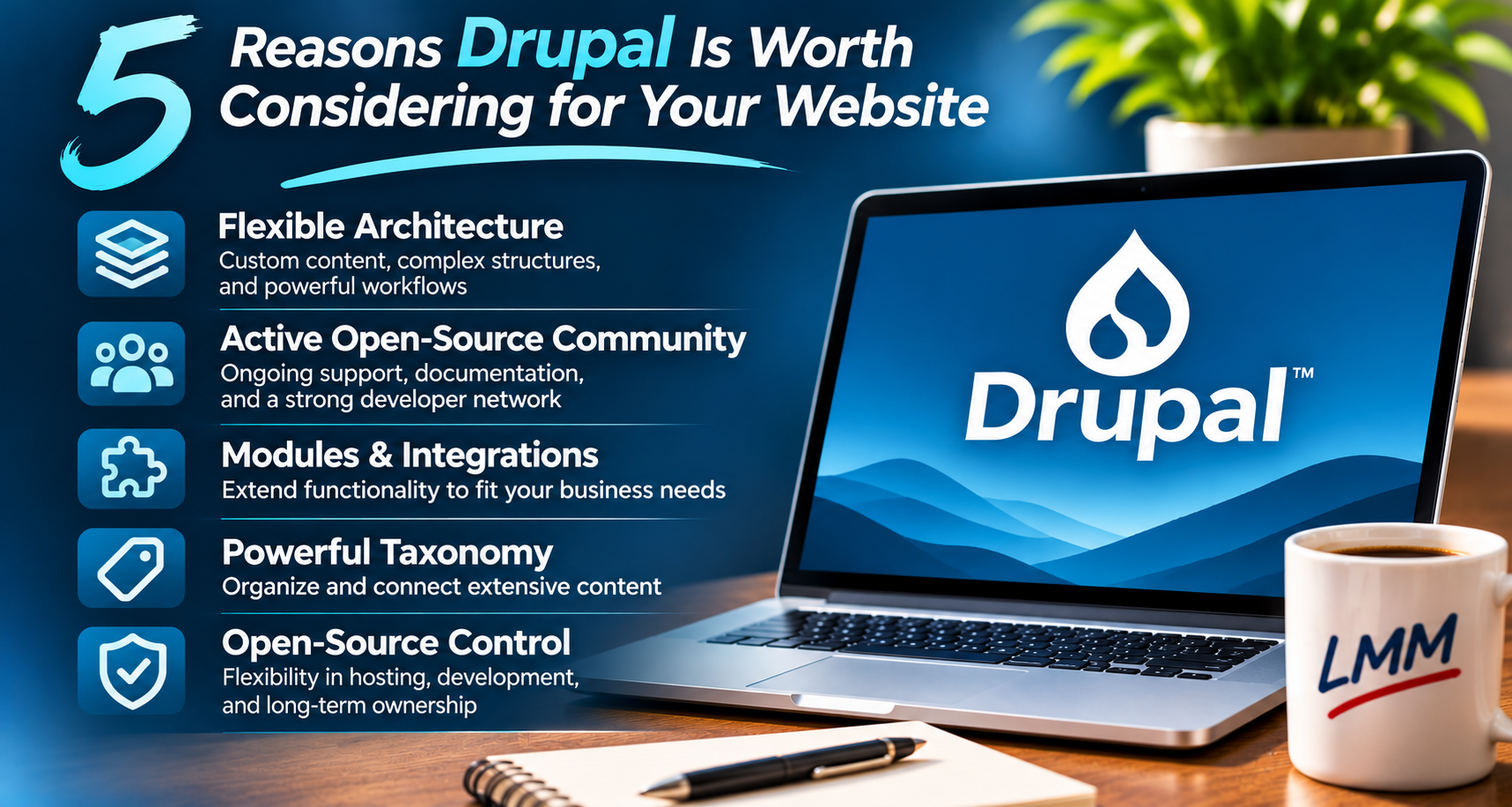
There is no universal best platform for every website. Drupal remains an option worth evaluating when a project requires complex content structures, permissions, or integrations.
Flexible architecture
Drupal can support custom content types, relationships, and workflows. That flexibility is useful for content-heavy organizations, but it also makes careful planning important.
An active open-source community
Documentation, community contributions, and professional development resources help teams solve problems and maintain projects. Assess the support available for the specific Drupal version you intend to use.
Modules and integrations
Contributed modules can accelerate development. Evaluate maintenance history, compatibility, and security before adopting them.
Powerful taxonomy
Custom vocabularies and relationships make it possible to organize extensive content in ways that reflect how visitors search and browse.
Open-source control
An open-source foundation gives organizations flexibility in hosting and development partnerships, provided they budget for ongoing updates and support.
The right decision depends on complexity, editorial needs, budget, and long-term ownership—not a developer’s favorite tool.